Skip to Content
Interactive Timeline

The Heart of Europe: A History of the Czech Lands

From ancient ceramics to modern democracy — the story behind the many names

A companion piece from SwissLink Military Surplus

A Journey Through Time

Sixteen pivotal moments that shaped the Czech lands — from prehistoric art to a modern European republic.

Venus of Dolní Věstonice — one of the oldest ceramic artworks in human history
~27,000 BC

Venus of Dolní Věstonice

One of the earliest known ceramic artworks in human history, this figurine was discovered at the base of the Pavlov Hills in Moravia. It dates to around 29,000–25,000 BC, making the Czech lands home to some of the oldest examples of fired-clay art on Earth.

Learn More
Celtic Bohemia — map of Boii tribal territory in Iron Age Central Europe
~390 BC

"Home of the Boii"

The Boii, a prominent Celtic tribe of the Iron Age, gave the western territory its lasting name — Bohemia. Known for their migrations across Europe, the Boii were frequently in conflict with Rome before being driven out around 8 BC by Germanic tribes, specifically the Marcomanni and Quadi.

Learn More
Reconstructed Slavic gatehouse — representative of early Slavic settlement in Central Europe
5th–7th Century

Slavic Settlement & Samo's Kingdom

By the end of the 5th century, Slavic tribes settled the region. In the first half of the 7th century, Samo — a Frankish merchant-turned-ruler — united these tribes into Samo's Kingdom, regarded as the first known Slavic state. The realm encompassed Moravia, Bohemia, Silesia, and parts of modern Slovakia.

Learn More
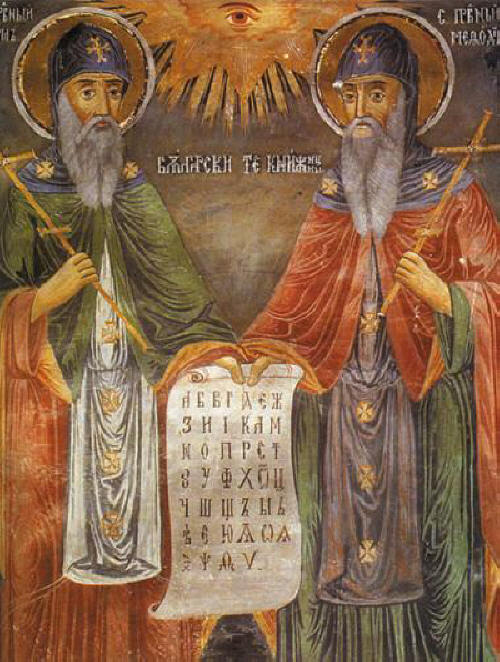
Saints Cyril and Methodius — painting by Zahari Zograf, 1848
9th Century

Cyril & Methodius Bring Christianity

Christian missionaries Constantine (Cyril) and Methodius settled in Moravia, introducing Christianity in the Old Church Slavonic language. Their mission helped bring the Slavic peoples of the region into the broader Christian world and laid cultural foundations that persist to this day.

Learn More
Prague Castle overlooking the Vltava River — seat of Bohemian power since the 900s
900s

Prague Established

Prague was established as the center of Bohemian culture, growing from a hilltop castle settlement into one of Central Europe's most important cities. The city would become a seat of power that attracted rulers and scholars for the next millennium.

Learn More
The Golden Bull of Sicily — decree proclaiming Bohemia a kingdom
1212

Golden Bull of Sicily

Přemysl Otakar I received the Golden Bull of Sicily from Emperor Frederick II, a formal decree proclaiming Bohemia a kingdom and its princes hereditary kings. This elevated Bohemia's status within the Holy Roman Empire and secured its autonomy for centuries.

Learn More
Charles IV — detail from the votive picture of Jan Očko of Vlašim
1340s–1378

Charles IV & Bohemia's Golden Age

The Kingdom of Bohemia reached its peak under Charles IV, who was crowned Holy Roman Emperor in 1355. He transformed Prague into a Gothic masterpiece and major European capital, founding Charles University (1348), commissioning St. Vitus Cathedral, and building the famous Charles Bridge.

Learn More
Jan Hus at the stake — a pivotal event leading to the Hussite Wars
1419–1434

The Hussite Wars

After reformer Jan Hus was burned at the stake for heresy in 1415, religious tensions exploded into the Hussite Wars. The movement fundamentally changed Czech society and created religious dualism for the first time in Christian Europe. The Hussites pioneered early firearms and the famous war-wagon formations.

Learn More
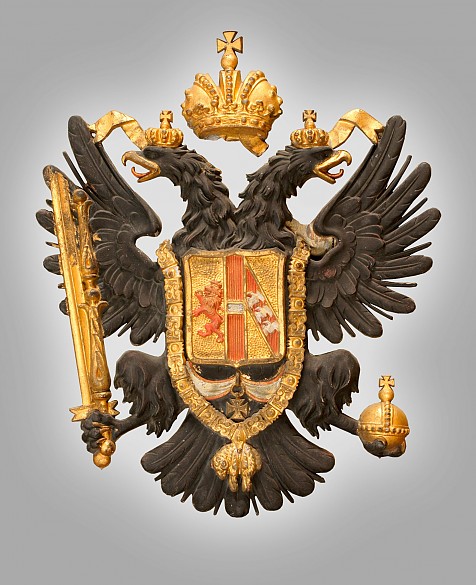
Habsburg double-headed eagle — emblem of the dynasty that ruled Bohemia for nearly 400 years
1526

Habsburg Rule Begins

The Habsburgs of Austria succeeded to the Bohemian throne, beginning nearly 400 years of rule over the Czech and Slovak lands. This influential dynasty controlled the Holy Roman Empire, Spain, and Austria, yet they never managed to extinguish the distinct Czech and Slovak identities.

Learn More
Declaration of Czechoslovak independence in 1918
1918

Birth of Czechoslovakia

Following Austria-Hungary's collapse at the end of World War I, an independent state of Czechoslovakia was proclaimed on October 28, 1918. Founded by Tomáš Masaryk, Edvard Beneš, and Milan Štefánik, the new state combined Czech and Slovak peoples seeking freedom from German and Hungarian domination.

Learn More
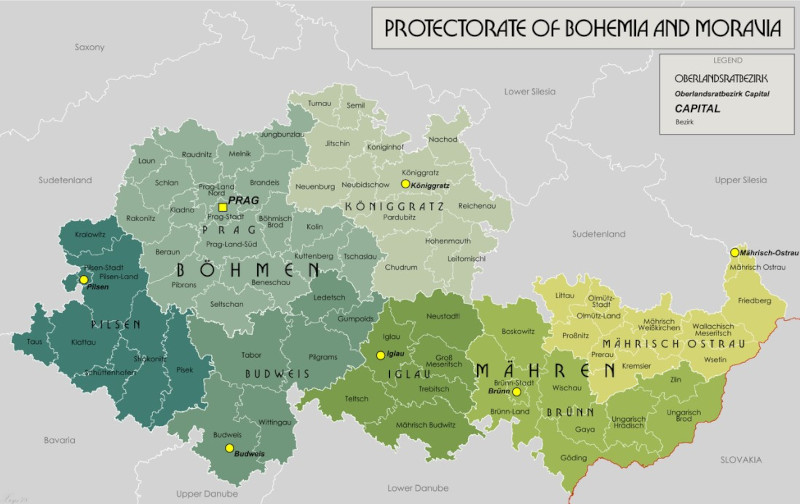
The Protectorate of Bohemia and Moravia under German occupation, 1939–1945
1939

Protectorate of Bohemia and Moravia

Just 21 years after independence, Hitler's Germany occupied the Czech lands and established the Protectorate of Bohemia and Moravia. The protectorate became a major industrial hub for the German war economy, while Slovakia was made a puppet state of the Third Reich.

Learn More
Klement Gottwald addressing crowds during the 1948 Communist coup in Czechoslovakia
1945–1948

Limited Democracy & Communist Takeover

After the German surrender, Czechoslovakia was restored but entered a period of "limited democracy." Citizens could vote, but by 1948, the Communist Party seized power — private property was confiscated and civil liberties suppressed. In 1960, the country was renamed the Czechoslovak Socialist Republic.

Learn More
Soviet tanks during the Warsaw Pact invasion of Czechoslovakia in 1968
1968

The Prague Spring & Soviet Invasion

In January 1968, reformist Alexander Dubček attempted to grant additional rights in an era called the "Prague Spring." On August 20–21, Czechoslovakia was invaded by approximately 250,000 Warsaw Pact troops from the Soviet Union, Poland, Bulgaria, and Hungary — crushing the reforms and tightening authoritarian control.

Learn More
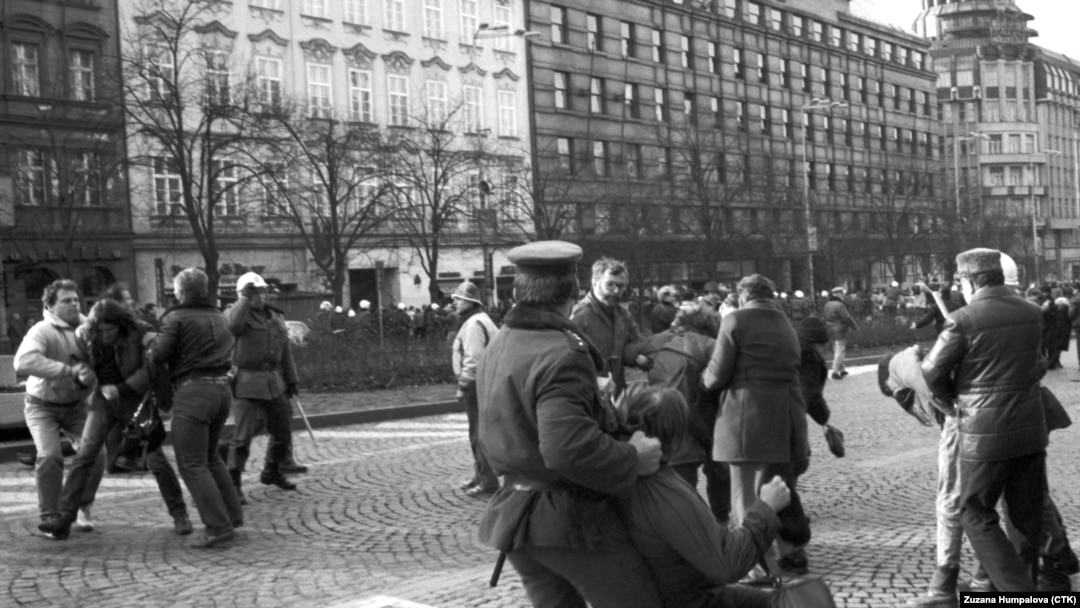
The Velvet Revolution — 1989 student-led uprising in Czechoslovakia
1989

The Velvet Revolution

A student-led uprising in November 1989 ended 41 years of Communist rule. Known for its peaceful nature and the iconic rattling of keys symbolizing it was time for the government to leave, the Velvet Revolution led by the Civic Forum resulted in the election of dissident playwright Václav Havel as president.

Learn More
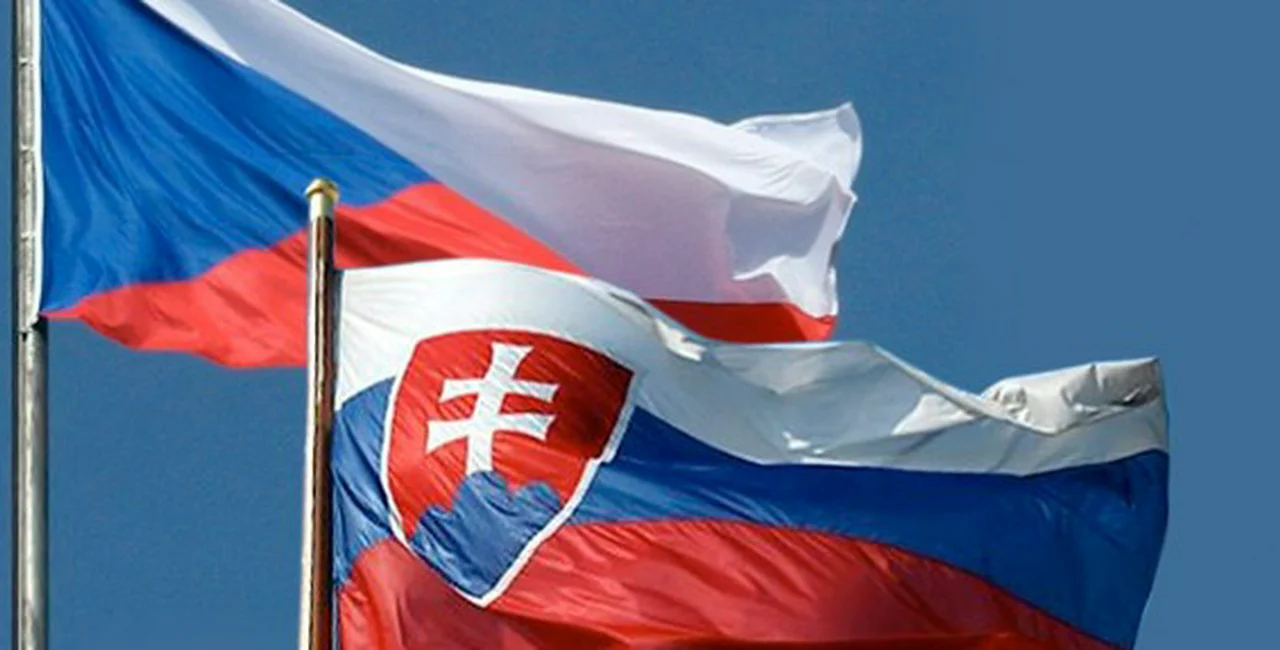
The Velvet Divorce — the peaceful dissolution of Czechoslovakia into the Czech Republic and Slovakia in 1993
1993

The Velvet Divorce

Noting their different political directions, the Czechs and Slovaks finalized their peaceful "Velvet Divorce" on January 1, 1993 — forming two separate nations: the Czech Republic and Slovakia. Like the revolution before it, the partition was entirely without bloodshed.

Learn More
Aerial view of modern Prague with its famous bridges — Czechia today
2016

Czechia

In 2016, the Czech Republic formalized its official shorthand name as "Czechia" — so now when you watch the Olympics, it fits nicely in the graphics. Today, Czechia ranks among the safest and most developed countries in Europe according to the Global Peace Index.

Learn More

The Many Names

One land, many identities — a visual guide to the names the Czech lands have carried through the centuries.

Kingdom of Bohemia
Království české
1198 – 1918
Moravia & Czech Silesia
Morava · Slezsko
Historical Regions
Czechoslovakia
Československo
1918 – 1938 · 1945 – 1960
Protectorate of Bohemia and Moravia
Protektorát Čechy a Morava
1939 – 1945
Czechoslovak Socialist Republic
ČSSR
1960 – 1990
Czech and Slovak Federative Republic
ČSFR
1990 – 1992
The Czech Republic
Česká republika
1993 – Present
Czechia
Česko
Short form adopted 2016

We carry authentic Czechoslovakian military surplus from the 1950s through the 1990s — including medical equipment, parkas, storage boxes, bags, and water bottles.