Steel vs. Plastic Fuel Cans
Why the Professional Choice Matters
When it comes to fuel,
"cheap" can be expensive.
A single leak or a ruined engine from contaminated fuel costs far more than a high-quality container. Here is how Wavian Steel Jerry Cans compare to the standard plastic jugs found at big-box retailers.
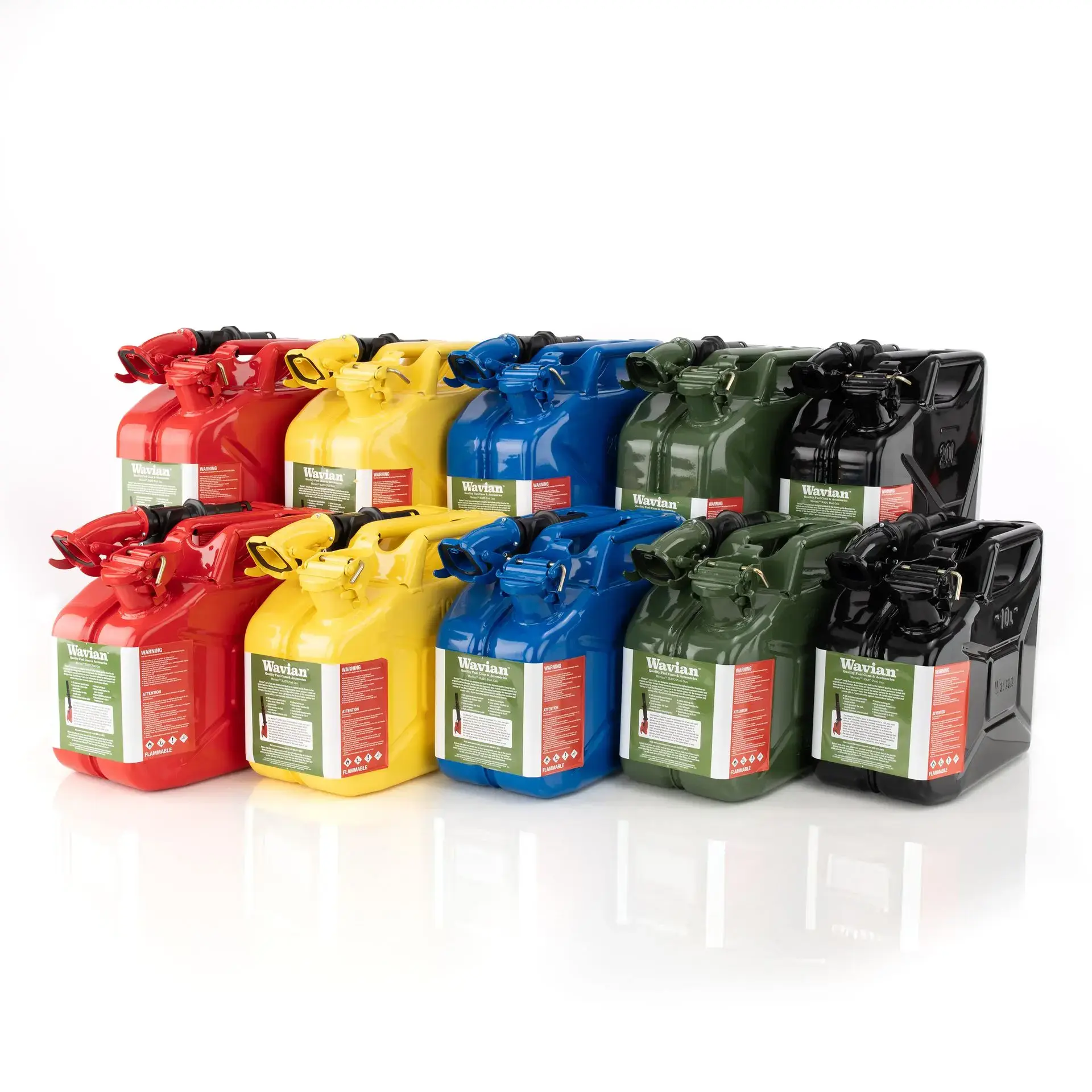
Comparison Table: Wavian Steel vs. Standard Plastic
| Feature | Wavian NATO-Spec Steel | Standard Plastic Jugs |
| Durability | 0.9mm cold-rolled steel; crush-proof. | Thin-wall HDPE; prone to cracking/punctures. |
| Airtight Seal | Fully recessed bayonet closure with locking pin. | Screw-on caps that often cross-thread or leak. |
| Vapor Loss | Zero. Prevents hazardous fumes and fuel loss. | High. Permeation allows fuel to "breathe" out. |
| Internal Lining | Rezol-lined to prevent rust and corrosion. | Unlined; can degrade or leach over time. |
| Shelf Life | Best for long-term storage (6–12+ months). | Short-term use only (3–6 months). |
| Safety Standards | UN, EPA, & CARB Certified in all 50 states. | Basic consumer safety only. |
| Life Expectancy | 20+ years with proper care. | 2–5 years before plastic becomes brittle. |
The Verdict: Which One Do You Need?
Choose Plastic If:
- You are using the fuel immediately (e.g., filling a lawnmower today).
- The container will stay in a controlled environment and won't be transported.
- Long-term reliability isn't a priority.
Choose Wavian Steel If:
- You are storing fuel for emergency preparedness or backup power.
- You are transporting fuel in a vehicle, boat, or off-road rig.
- You want a "buy once, cry once" solution that will last for decades.
- You need to prevent gasoline odors in your garage or storage shed.
"Is It Worth the Investment?"
A Wavian Jerry Can is more than just a container; it’s an insurance policy for your fuel. While a plastic jug might save you money at the checkout counter, a Wavian can saves your fuel, your equipment, and your peace of mind for the next twenty years.
Swiss Link Pro-Tip: To maximize the life of your fuel, always use a stabilizer and ensure the bayonet arm is fully locked. A properly sealed Wavian can is the best defense against fuel oxidation.
Our latest content
Check out what's new in our company !
Maintenance & Care: How to Make Your Wavian Last a Lifetime
A Wavian Jerry Can is built to be nearly indestructible, but a little bit of preventative care ensures it stays leak-proof and rust-free for decades. Follow these simple steps to maintain your gear:
1. Inspect the Gasket Periodically
The rubber gasket inside the cap is the "heart" of the airtight seal.
- Check for Cracks: Over several years, extreme heat or cold can cause rubber to dry out. If the gasket looks cracked or feels brittle, replace it.
- Keep it Clean: Wipe away any grit or dirt from the gasket and the rim of the can to ensure a perfect metal-to-rubber seal.
- Replacement Gaskets: We carry Replacement Gaskets specifically for Wavian cans.
2. Store It Properly
- Upright is Best: While Wavian cans are designed to be leak-proof in any orientation, storing them upright reduces pressure on the seal over long periods.
- Avoid Standing Water: While the interior is lined with Rezol to prevent rust, try to keep the exterior dry or stored off the bare ground to prevent exterior base-rim corrosion over time.
3. Fuel Stabilization
Even in an airtight steel can, gasoline naturally degrades over time due to chemical breakdown.
- Use Stabilizer: If you plan on storing fuel for more than 6 months, add a high-quality fuel stabilizer.
- Rotate Your Stock: We recommend a "First In, First Out" (FIFO) approach. Use your stored fuel in your vehicle every 6–12 months and refill the can with fresh fuel.
4. Cleaning the Interior
If you are switching fuel types (e.g., moving from Diesel to Gasoline) or if the can has sat empty for a long time:
- Rinse with Fresh Fuel: Swish a small amount of the new fuel type inside the can to collect any residual moisture or old fuel, then dispose of it properly at a local recycling center.
- Avoid Water: Never "wash" the inside of a steel fuel can with water, as this can lead to internal corrosion if not dried perfectly.
5. Operating the Bayonet Lock
The locking pin is a safety feature to prevent accidental opening.
- Engagement: Always ensure the pin is fully clicked into place.
- Don't Force It: If the arm feels tight, check that the gasket is seated flat. The seal should be firm, but you shouldn't have to use tools to close it.
Pro-Tip from Swiss Link: If you’re using your can in a high-vibration environment (like mounted to the back of an off-road rig), double-check the locking pin every few days to ensure it hasn't shifted.
Want more tips? Check out our latest post on Fuel Preparation and Off-Grid Safety.